
Almost everyone shopping for a used Mercedes, BMW, Audi or Porsche in the UAE runs into the same warning from a friend or a colleague: “Beautiful car, but wait until something breaks.”
It’s half true. German cars are not expensive to own because they are unreliable — most of them cover 200,000 km without drama when they’re looked after. They’re expensive when owners budget only for the purchase price and treat everything after that as a surprise. The sticker price is the small decision. The four years that follow are the big one.
This guide breaks down what a German car actually costs to run in Dubai and Sharjah, which failures the UAE climate causes that European owners rarely see, and how to plan the numbers before you sign anything.
The four cost buckets nobody adds up together
Most buyers compare monthly instalments and stop there. Real ownership cost sits in four places:
- Finance — the instalment, plus the interest you’ll pay across the full term
- Fixed running costs — insurance, registration, Salik, parking, fuel
- Servicing and parts — the bucket that varies most between owners
- Depreciation — silent, invisible, and usually the largest single number
Buyers obsess over the first and ignore the fourth. In the UAE’s used market, a three-year-old German executive saloon has frequently shed a large share of its showroom value — which is exactly why buying used is such good value, and why buying new demands a clearer head.
Before you commit to a car, run the numbers properly. A finance calculator for car purchases will show you the total interest across the term, not just the comfortable-looking monthly figure — and that total is often the difference between two models you thought were priced the same.
What German cars actually cost to service in the UAE
Service pricing splits into three clear routes:
Main dealer. Highest labour rate, genuine parts, full digital service history. Worth it while the car is under warranty or if you plan to sell to a buyer who scrutinises stamps.
Independent specialist. Typically a meaningful saving on the same job, often with the same diagnostic equipment and a technician who has done that specific repair a hundred times.
Specialist workshop + parts you source yourself. The cheapest route, and increasingly common in Dubai and Sharjah. You buy the parts, the workshop bills labour only.
A rough guide to annual maintenance spend on a well-kept, out-of-warranty German car in the UAE:
| Vehicle type | Typical annual servicing + wear items |
|---|---|
| Compact saloon (3 Series, C-Class, A4) | AED 3,000 – 6,000 |
| Executive / SUV (5 Series, E-Class, Q7, X5) | AED 5,000 – 10,000 |
| Air-suspension SUV (Cayenne, Q7, X7, GLE) | AED 7,000 – 15,000 |
| Performance (M, AMG, RS, Porsche GT) | AED 12,000+ |
Those figures assume preventive maintenance. Skip a cooling system service and one summer can put you at the top of the range in a single afternoon.
The UAE heat tax: what fails here that doesn’t fail in Munich
This is the part European owner forums never prepare you for. A German engineer signs off components against a design brief that assumes 35°C summers and motorway cruising. Dubai runs 48°C ambient, sand in every air path, and stop-start traffic where airflow through the radiator drops to almost nothing.
The result is a predictable failure pattern:
- Plastic cooling components. Thermostat housings, expansion tanks and coolant flanges on BMW N20/N55 and VAG 2.0 TFSI engines become brittle far earlier here. They rarely leak politely — they crack, dump coolant, and risk a warped head.
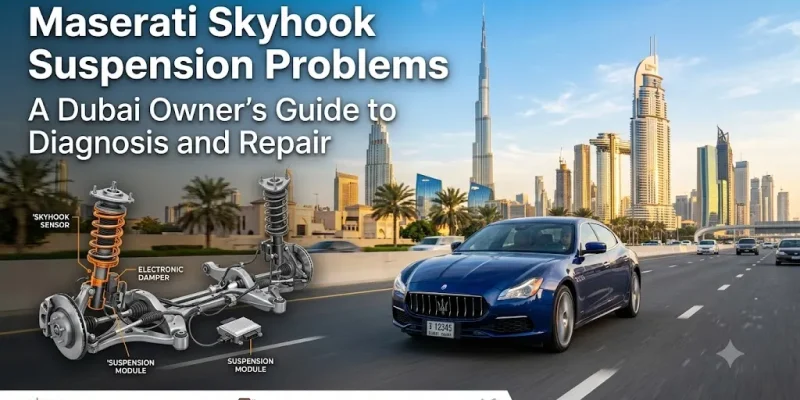
- Air suspension. Fine dust destroys compressor dryer cartridges and lodges in bellow seals. A Range Rover, Cayenne, Q7 or X5 that sags overnight is usually telling you the compressor has been overworking for months.
- Batteries. An AGM battery that lasts five years in Europe often gives two to three in the UAE. Heat, not cold, is what kills batteries.
- Transmission fluid. ZF 8HP, PDK, DSG and S tronic units all run hotter in city traffic than the “lifetime fill” schedule assumes. Servicing them earlier than the book says is one of the cheapest insurance policies in motoring.
- Rubber and plastic everywhere. Bushings, hoses, mounts, trim clips and door seals all age faster under UV and heat.
None of this makes a German car a bad buy in the Gulf. It makes preventive parts spending the smartest money you’ll spend on it.
Where the parts decision saves — or costs — you thousands
Two owners with identical cars can end up with wildly different bills, and the reason is almost always how they buy parts.
There are four tiers, and each has a right moment:
- Genuine — factory-boxed and dealer-supplied. Right for cars under warranty, safety-critical systems and anything you’ll resell soon.
- OEM / OE-supplier — made in the same factory that supplies the carmaker, sold under the supplier’s own name. Bosch, ZF, ATE, Lemförder, Mahle, Brembo, Sachs. Frequently the identical component without the branded-box premium. Right for out-of-warranty daily drivers.
- Quality aftermarket — independently manufactured to fit. Brand choice is everything here; cheap unbranded parts are a false economy that can take other components with them.
- Tested used — sensible for lighting assemblies, trim, body panels, electronic modules and heritage components that were never going to wear out anyway.
Getting this right needs a supplier who will actually verify fitment by VIN rather than guessing from the model year — German part numbers change at facelifts, option codes and production breakpoints. A 2019 facelift Range Rover Sport doesn’t share air struts with the 2017 car; an F30 with adaptive M Sport suspension doesn’t take base 320i arms.
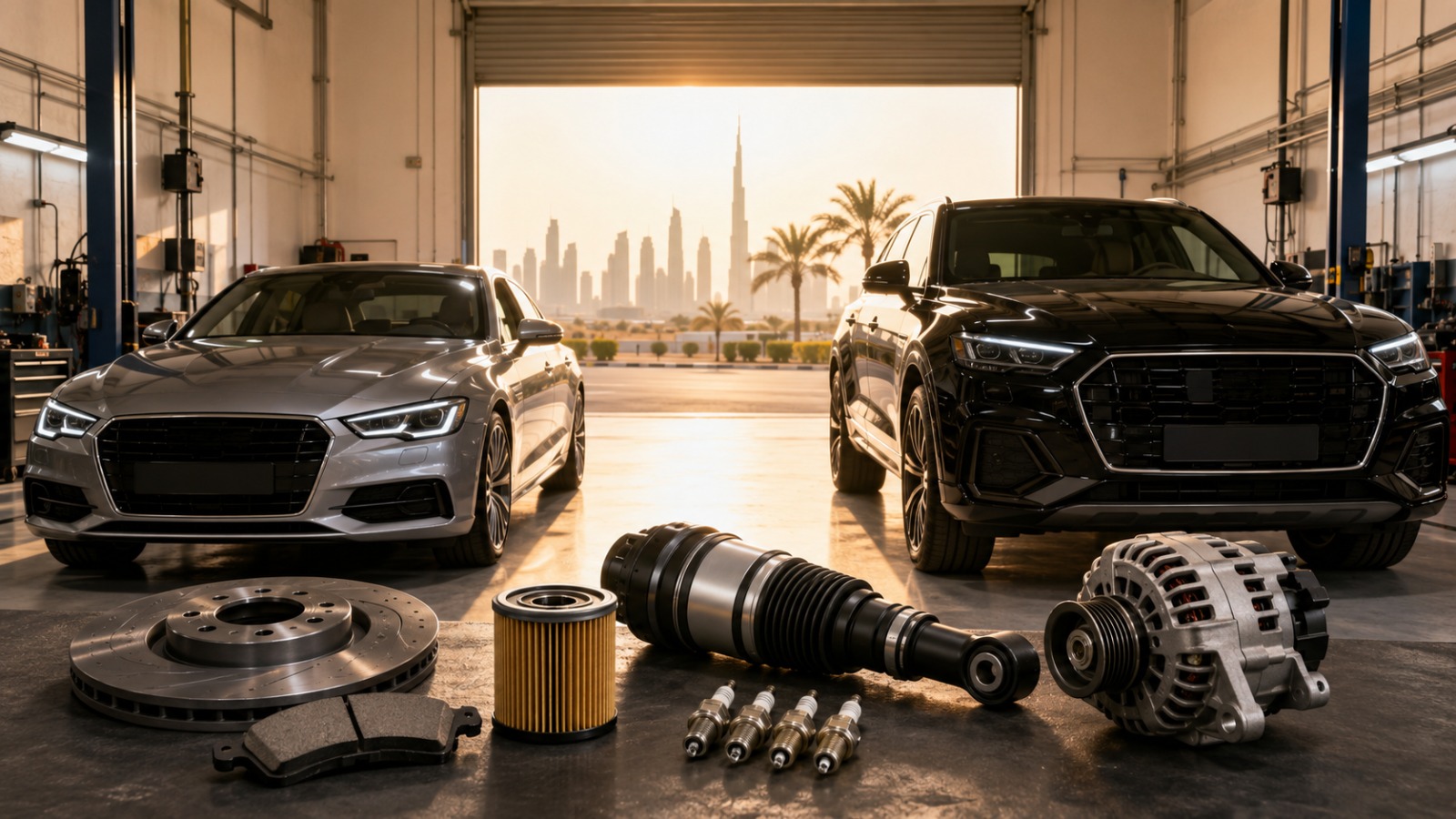
If you want the three tiers priced side by side before you decide, Saaz supplies genuine, OEM, aftermarket and tested used spare parts for German and European cars, delivered across Dubai and Sharjah — including Mercedes, BMW, Audi, Porsche, Jaguar, Bentley, Maserati, Land Rover, Range rover, and Rolls Royce parts.
Building a realistic monthly budget
Work backwards from your total monthly outlay, not from the instalment. A workable structure:
Instalment + insurance + fuel + Salik + a maintenance reserve.
That last item is the one people skip. Set aside AED 400–800 a month for a compact German saloon, AED 800–1,500 for an executive SUV, into a separate account you don’t touch. When the water pump goes in July, it’s an inconvenience rather than a crisis.
On the finance side, two variables move your total cost far more than the interest rate does: the down payment and the term length. A longer term feels lighter every month and costs considerably more overall. Before you agree to a term, calculate car loan EMI figures across 36, 48 and 60 months with the same down payment — seeing the total interest on each side by side usually settles the decision in about thirty seconds.
Five habits that genuinely lower the bill
- Service the cooling system before summer, not during it. Coolant, hoses, thermostat housing, expansion tank, fan operation. This is the single highest-return preventive job in the UAE.
- Change transmission fluid on a UAE interval. Ignore “lifetime fill.” Sensible intervals cost a fraction of a mechatronics unit.
- Fix small leaks immediately. A weeping seal on a German engine is rarely just a seal — it’s usually an early warning.
- Buy parts on tier, not on price. Genuine where it matters, OE-supplier where it doesn’t, used where nothing wears out. Never unbranded.
- Keep every invoice. In the UAE resale market, a documented parts and service history moves the asking price more than most owners expect.
Frequently asked questions
Are German cars expensive to maintain in Dubai? They cost more than a mainstream Japanese equivalent, but the gap narrows sharply when you use an independent specialist and source OE-supplier parts instead of paying dealer retail. The owners who report huge bills are usually the ones who deferred preventive work.
Is it cheaper to buy a used German car in the UAE? Usually yes, because the steepest depreciation has already happened. The trade-off is that you inherit the maintenance backlog, so budget for a proper pre-purchase inspection and a first-year catch-up service.
Are aftermarket parts safe for a German car? OE-supplier brands — Bosch, ZF, ATE, Brembo, Lemförder, Mahle, MANN — are made in the same factories that supply the carmakers and are entirely safe. Unbranded budget copies are a different category and are where the horror stories come from.
How much should I keep aside for repairs each year? A reasonable rule is 4–6% of the car’s current market value annually for an out-of-warranty German car in the UAE, rising for air-suspension SUVs and performance models.
Does the UAE climate really shorten part life? Measurably, yes — especially for batteries, cooling components, rubber bushings, air suspension parts and transmission fluid. Plan replacement intervals shorter than the European service book suggests.
Ready to price a repair properly?
Send your VIN and a photo of the old part label on WhatsApp, and you’ll get genuine, OEM, aftermarket and tested used options quoted side by side with warranty terms and lead times — delivered anywhere in Dubai or Sharjah.
📞 WhatsApp / Call: +971 56 448 4075